
Depth
44 Meter
Type

Dimension
Meter
Location
Bebek KayalıklarıPhoto Gallery
AllHistory:
Bebek Kayalıkları is recorded as the location where Halley’s Comet was first sighted in history. Pliny the Elder and Aristotle recount that in 467 BC, a large brown meteorite landed near the ancient settlement of Aegospotami, overlooking Bebek Kayalıkları, while Halley’s Comet was visible in the sky. It is also believed that the Battle of Aegospotami, which resulted in a decisive Spartan victory over the Athenians, took place in this region. According to another local legend, the rocks were named "Bebek Kayalıkları" (Baby Rocks) because people fleeing pirate raids reportedly left their infants on these rocks to prevent their cries from being heard and giving away their position.
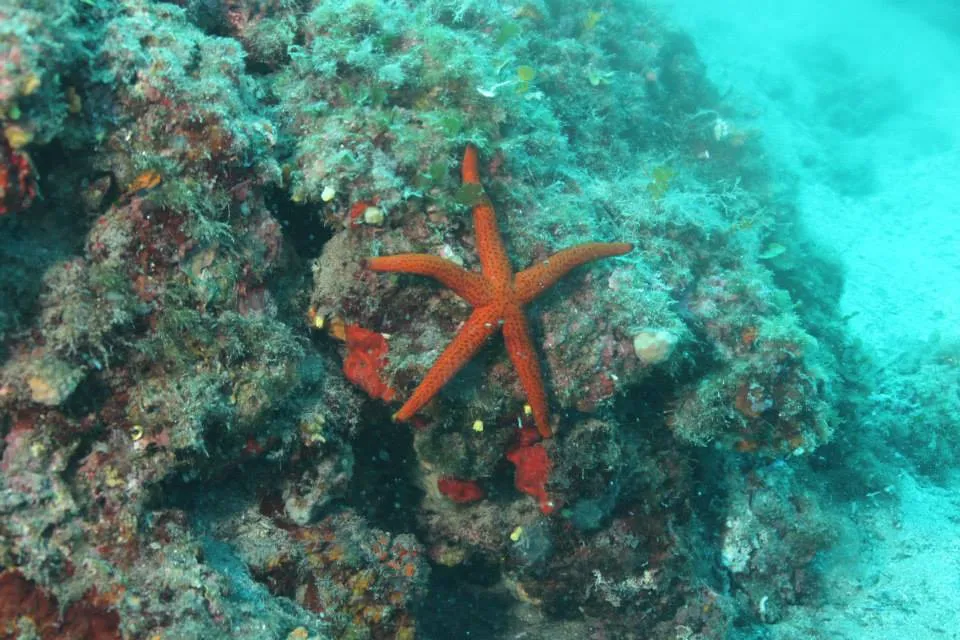
Featuring numerous diving points, Bebek Kayalıkları offers divers seeking a drift dive experience a vibrant array of hundreds of colors and marine species. In the first 20-meter zone, a dense population of yellow soft corals can be observed. Interestingly, while these corals typically open their tentacles to feed on zooplankton at night, the strong currents here allow them to feed during the day. Other fauna species you may encounter include red and yellow black-faced blennies in almost every rock crevice, and spiny lobsters (böcek) attempting to protect themselves with their long antennae. Bebek Kayalıkları also boasts a rich population of moray eels. Additionally, there is a high probability of encountering species such as dolphins, anglerfish, or catsharks in this area.
Diving Equipment Information:
The equipment to be used for dives includes standard gear required for fully equipped dives: mask, fins, weights, buoyancy control device, scuba tank, wetsuit (3–5 mm depending on the season), regulator, and gloves. During the November–March season, a 7 mm neoprene suit, semi-dry suit, or dry suit is required. Diving with this equipment is possible at the Gallipoli Historical Underwater Park.
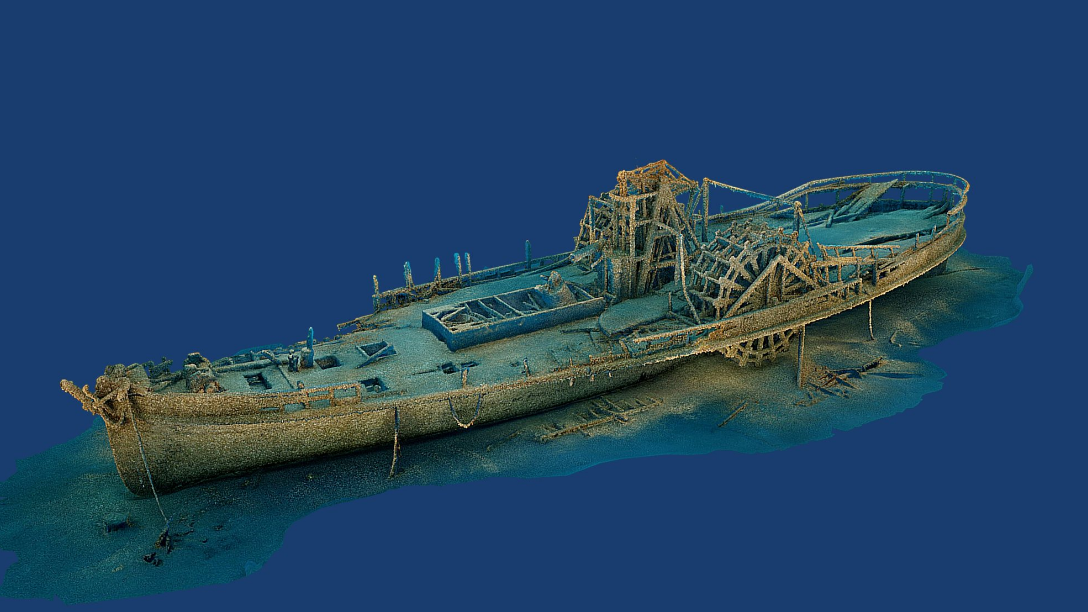 ▶
View 3D Model
▶
View 3D Model